What the trend is actually about, and what keeps skin healthy over time.
Skin Longevity: One Term, Many Promises
Longevity now appears on almost everything. In skincare, the term describes a sensible objective: preserving skin function for as long as possible. It is not a protected term, however, and it is not consistently defined. On packaging, it therefore says little about what is actually in the formulation.
Longevity is on cereal boxes. On supplements. On nine-euro foot creams and on three-hundred-euro serums. Anyone who has read anything about health or beauty over the past year has had a hard time avoiding the word.
In skincare it refers to something quite reasonable: the long-term preservation of skin function. Skin should stay stable and resilient for as long as possible and be able to recover from stress. Scientifically, there is nothing wrong with that.
The problem lies elsewhere. Longevity is not a protected term. There is no definition that has to be met before it can go on a package, and no minimum requirement for what stands behind it. It is therefore found on carefully developed formulations as well as on simple moisturizers.
What longevity actually means in skincare
Skin longevity describes the effort to preserve core skin functions for as long as possible. Skin should remain stable, be able to regenerate, and cope with changing demands.
The underlying research is solid. Dermatological research today is no longer concerned only with correcting visible signs of aging. Increasingly it looks at the processes underlying them, and at preserving skin function for as long as possible. Aging itself is a normal process. What can be influenced is the rate at which functions decline.
New terms keep appearing: Skin Longevity, Skingevity, Skinspan. The concepts overlap considerably, but they are not consistently defined. The label alone therefore does not tell you what any of these terms actually means for the formulation.
Anti-aging went the same way. The term once signaled a certain rigor and was used so broadly that today it says almost nothing. Longevity appears to be on the same path, only faster.
Three levels of long-term skin health
Whether skin stays healthy and resilient over time plays out on several levels. Cell renewal changes, tissue gradually loses stability, and skin often needs longer to recover from stress.
Skin cell function - when skin renews more slowly
Much of this begins in the skin cells, long before it is visible in the mirror. The epidermis renews itself completely within about six to eight weeks on average: new cells grow, old ones are shed.
Over the years this cycle slows. It shows up in small things. A blemish takes longer to disappear. A minor injury stays visible longer. And because dead cells are shed more slowly, the complexion looks more uneven, duller, and without the radiance that characterizes healthy skin.
Skin aging cannot be stopped. How quickly certain visible changes develop can be influenced, however.
Structure and stability - when skin loses firmness
Collagen provides structural support to connective tissue, while elastin allows it to stretch and return to its original shape. Over time, these structures change and are renewed less efficiently. Skin gradually loses firmness and elasticity and becomes more sensitive to external influences.
At the surface, the skin barrier forms the outer protective layer. It holds moisture in the tissue and limits what penetrates from outside. When it is weakened, this shows up first in everyday life: skin feels tight after cleansing. A product that worked without any trouble for years suddenly stings a little. Redness stays visible longer.
This is more than a question of comfort. A weakened barrier holds moisture less well and lets further stressors take a greater toll.
Adaptability - when skin needs longer to recover
Skin is permanently under the influence of the exposome, meaning all external and internal factors that act on it over the course of a life. These include UV radiation, particulate matter, temperature changes, sleep, stress, and hormonal changes, among others.
What matters is not only that such exposures occur. It also matters how quickly skin recovers from them. After a day in the sun, after a short night, or after a demanding week: does it look balanced again the next morning, or does it need several days?
If this recovery time lengthens, irritation and low-grade inflammatory processes can persist longer (inflammaging). Cellular senescence contributes to this as well: cells that no longer divide can remain in the tissue and influence their surroundings. At first this is barely noticeable. Over years, however, such exposures can add up.
At what age does this become relevant?
There is no fixed age at which long-term skin health begins. That the age of thirty is often named has more to do with how skincare products are categorized than with the biology of skin.
More telling than age is the actual exposure. Someone who spends a lot of time outdoors, lives in a city with high particulate levels, sleeps irregularly, or is going through a hormonal transition faces different conditions than someone of the same age with less exposure. Sleep is often underestimated here: studies in adults show that even partial sleep deprivation activates molecular processes associated with cellular aging. Two women born in the same year can differ considerably from a dermatological standpoint.
Two things follow from this in practice.
It is never too early: UV damage, for example, accumulates over a lifetime and much of it cannot be reversed, which is why a careful approach to sun exposure remains the most effective measure at any age.
Nor is it ever too late, because the skin barrier and persistent irritation can still be influenced later on. Deeper lines and declining firmness, on the other hand, cannot be fully restored this way.
What can be done to slow skin aging?
Thinking about skincare in the long term changes the measure of success. Not every visible immediate effect also improves the condition of skin over time. What counts is whether a routine is effective, well tolerated, and sustainable over a longer period.
Do not keep irritating skin. More actives or maximum concentrations do not automatically produce better results. Too many active products, applying them too often, or unfavorable combinations can compromise the skin barrier. Stinging, flaking, persistent redness, or increasing sensitivity are not necessary signs that a product is particularly effective.
Keep the skin barrier stable. An intact barrier helps skin hold moisture and buffer external stressors more effectively. It also determines whether a routine with actives stays tolerable over the long term. The most spectacular formulation with the trendiest ingredients is of little use if skin reacts with constant irritation.
Be consistent rather than constantly starting over. Many effects of skincare only develop through regular use. Anyone who keeps switching products can often no longer tell what actually works and what skin tolerates. A manageable routine suited to your skin is therefore usually more sensible than constantly reacting to new trends.
Limit UV exposure. UV radiation is the best-documented external factor in skin aging. How much protection makes sense depends on the UV index, time spent outdoors, time of day, and surroundings. What matters is not underestimating the actual exposure.
What skincare can do, and where its limits lie
Skincare can do considerably more than provide moisture in the short term. It can stabilize the skin barrier, protect against oxidative stress, and support regeneration. Day to day, this shows up as skin that holds moisture better, looks more balanced, copes more easily with what it is exposed to, and simply looks fresher.
Visible signs of skin aging can be influenced as well: dryness lines, uneven pigmentation, and rough texture. What is decisive here is less a single active than the regular support of several skin functions over a longer period.
The limit lies where visible improvement becomes a promise to make skin biologically years younger. For topical skincare, there is as yet no evidence that it can permanently reset the biological age of human skin or halt skin aging.
Firmness lost over decades, and photodamage that has accumulated over that time, can be influenced and partly mitigated, but not fully reversed. Some brands suggest otherwise, but that does not reflect the state of research.
There is also a methodological limitation. Cosmetic studies usually run over weeks or months, while long-term skin health develops over years. What is measured, therefore, are factors such as moisture content, barrier function, or elasticity. These values are meaningful, but they do not replace long-term evidence.
And finally, a considerable part of what places long-term stress on skin arises outside the skincare routine.
Skincare can improve conditions. It cannot make up for the circumstances someone lives in.
Why we at GGs Natureceuticals do not use the term
Longevity was not originally a skincare term. In its broader context, longevity is about staying healthy and maintaining physical function for as long as possible. Skincare can be part of that, alongside nutrition, exercise, sleep and how we manage everyday stressors.
By now, the term has long since moved beyond that broader context. It appears on teas, supplements, pain relief creams and serums alike.

We could have put longevity on our Adaptive Defense Creams, for example. Our formulations aim at exactly what the term describes: a stable skin barrier, support for the skin’s own repair processes, and the skin’s ability to cope with changing demands. We chose not to, because a word that applies to everything no longer says anything about any single product.
We continue to use the concepts behind it: the exposome, barrier function and adaptability. What they mean does not change when the umbrella term “Skin Longevity” is replaced by the next one.
Conclusion
The idea behind Skin Longevity makes sense: preserving skin function for as long as possible while also reducing visible signs of skin aging. But whether a skincare product contributes to this is not determined by the word on its packaging.
What matters more is the efficacy, quality and tolerability of the formulation, alongside a routine suited to your skin that you can maintain over time.
Less catchy than a trend-driven term. But a better measure of what matters in long-term skincare.
FAQ – Frequently Asked Questions About Skin Longevity
What does Skin Longevity mean?
Skin Longevity is an approach to keeping skin functioning well for as long as possible, with a stable skin barrier, the ability to regenerate, and the resilience to cope with changing stressors. It focuses both on the processes underlying skin aging and on reducing visible signs such as wrinkles, dark spots, and loss of firmness.
Is Skin Longevity the same as anti-aging?
No, but the two concepts overlap. Anti-aging is primarily associated with reducing visible signs of aging. Skin Longevity combines this goal with preserving skin function over the long term. Skin aging cannot be stopped, but its progression can certainly be influenced.
Is Skin Longevity a protected term?
No. The term is not legally defined and is not tied to any uniform minimum requirements. On its own, it therefore says little about what a product actually does.
Can skin aging be slowed?
To some extent, yes. Research shows that premature skin aging can be slowed. Consistent UV protection, a stable skin barrier, and a skincare routine that does not continually overwhelm the skin all play an important role. However, there is currently no evidence that skincare can completely reverse or permanently halt the skin's biological aging process.
At what age does Skin Longevity become relevant?
There is no fixed age limit. Skin Longevity does not begin only when the first wrinkles appear. Even at a young age, it makes sense to protect the skin from external stressors and support its barrier. As skin ages, dryness, pigmentation changes, or loss of firmness may become more prominent. A sensible approach is therefore to protect the skin early on and continually adapt skincare to its changing needs.
- Skin longevity: A paradigm shift in aesthetics. Journal of Cosmetic Dermatology, 2024. doi:10.1111/jocd.16484 onlinelibrary.wiley.com/doi/10.1111/jocd.16484
- Cellular Senescence in Human Skin Aging: Leveraging Senotherapeutics. Gerontology, 2024. doi:10.1159/000534756 karger.com/ger/article/70/1/7/868351/Cellular-Senescence-in-Human-Skin-Aging-Leveraging
- Skin aging from mechanisms to interventions: focusing on dermal aging. Frontiers in Physiology, 2023. doi:10.3389/fphys.2023.1195272 www.frontiersin.org/journals/physiology/articles/10.3389/fphys.2023.1195272/full
- Skinspan: A Holistic Roadmap for Extending Skin Longevity With Evidence-Based Interventions. Journal of Cosmetic Dermatology, 2025. doi:10.1111/jocd.70432 onlinelibrary.wiley.com/doi/10.1111/jocd.70432
Recommended products:
-
Adaptive Defense CreamA cream that thinks ahead:...Regular price €86,00Regular priceUnit price €1.720,00 per l
-
Adaptive Defense Cream RichA cream that thinks ahead:...Regular price €86,00Regular priceUnit price €1.720,00 per l
-
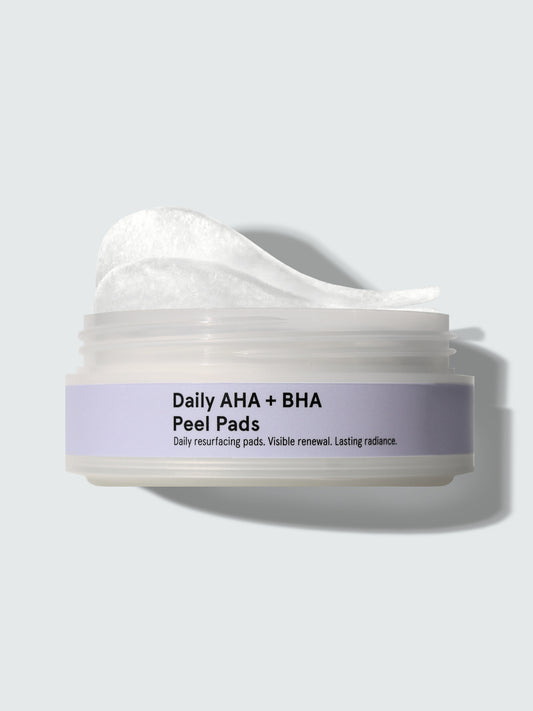
Daily AHA+BHA Peel PadsThese exfoliating peel pads with...Regular price €56,00Regular priceUnit price €1.120,00 per l
-
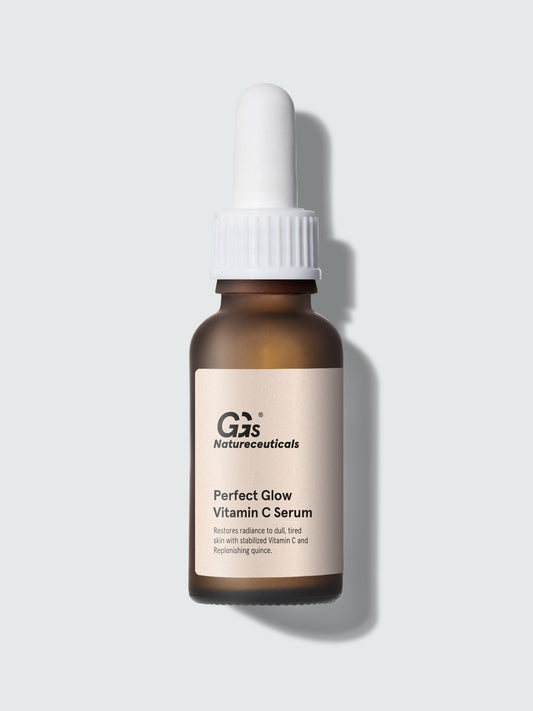
Perfect Glow Vitamin C SerumAn oil-free serum with a...Regular price €45,00Regular priceUnit price €1.500,00 per l