Today, a significant part of daily life takes place in front of screens, both professionally and privately. Work, reading, news, social media and streaming have become a constant presence. The skin responds to this exposure more distinctly than previously assumed. This biological response is known as digital Aging.
What Is Digital Aging?
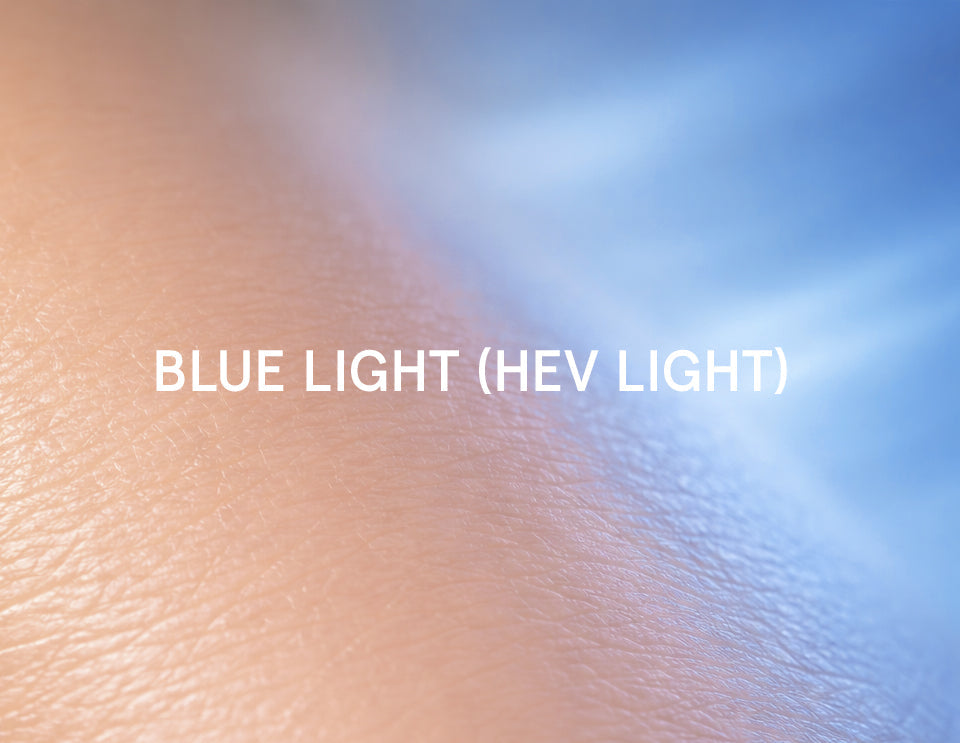
It refers to the cumulative biological impact of high-energy visible light (HEV) on skin structure and function. Digital aging describes a form of skin aging triggered by high energy visible light, commonly known as HEV light. This portion of blue light lies within a wavelength range of approximately 400 to 500 nanometers and is emitted by LED screens, smartphones, tablets and artificial indoor lighting.
HEV light is not ultraviolet radiation. However, it penetrates deeper into the skin, reaching the dermis, where it can induce oxidative stress. The effects are not immediately visible, yet on a biological level, aging processes begin long before the first external signs appear.
Context matters. The intensity of HEV light from screens is significantly lower than that of sunlight. What matters is the regular and cumulative exposure that defines the contemporary digital environment.
How Does HEV Light Affect the Skin?
Current dermatological research indicates that HEV light increases the formation of reactive oxygen species (ROS), also known as free radicals. These reactive molecules can damage cellular structures, overwhelm antioxidant defense systems, promote inflammatory processes and slow down intrinsic repair mechanisms.
Fibroblasts are particularly affected. These cells are responsible for collagen and elastin production. When oxidative stress disrupts their function, skin gradually loses firmness and fine lines may appear earlier.
HEV light also influences melanin activity. Studies suggest that certain skin types respond to blue light with increased pigmentation. With repeated exposure, this can contribute to uneven pigmentation, an effect that intensifies over time.
More recent findings point toward epigenetic effects. HEV exposure may influence gene activity related to cellular repair, inflammation control and the synthesis of structural proteins. These changes occur invisibly, yet they exert long term effects deep within the skin architecture.
Why Digital Aging Is More Relevant Than Ever
Exposure to digital interfaces has become a constant environmental factor. A typical day now includes several hours of screen based work, additional screen use during breaks, evening exposure to digital devices and continuous indoor LED lighting.
Average daily screen time has nearly doubled over the past decade, along with cumulative HEV exposure. This stress develops gradually but remains persistent. Even at low intensity, oxidative stress accumulates over years.
Digital stress caused by constant availability, information overload and irregular sleep patterns can elevate cortisol levels. Cortisol, in turn, affects barrier integrity and the skin’s regenerative capacity.
Core Biological Processes Behind Digital Aging
Digital aging primarily operates through three closely interconnected mechanisms.
- Oxidative stress
Reactive oxygen species attack lipids, proteins and DNA. The antioxidant capacity of the skin is increasingly challenged in the digital environment. - Low grade inflammatory activity, also referred to as inflammaging
HEV exposure promotes subtle, chronic inflammatory responses that alter the skin’s stress regulation over time. - Impaired repair processes
When cellular regeneration slows, structural changes emerge earlier and are compensated less efficiently.
Together, these mechanisms explain why digital aging is not a short term irritation, but a cumulative and deep acting form of skin aging.
How Contemporary Skincare Addresses These Processes
Effective skincare strategies addressing digital aging must operate on multiple levels.
- Neutralization of oxidative stress through stable and highly effective antioxidants that are active against HEV induced reactive oxygen species.
- Support of cellular repair processes to stabilize regeneration and structural integrity over time.
- Modulation of pigment altering pathways, particularly for skin types that are more sensitive to blue light.
- Reinforcement of the skin barrier, as a resilient barrier is better equipped to buffer light induced stress.
The decisive factor is not a single ingredient, but the interaction of these functions. This is how genuine cellular resilience is built in the digital environment.
Practical Measures in Everyday Life
- Screen brightness should be reduced, as many devices operate brighter than necessary.
- Viewing distance can be increased, even small adjustments can have a noticeable effect.
- Indoor lighting can be optimized, as warm white light reduces the HEV component.
- Skincare with a clear antioxidant focus can support daily exposure.
- Regeneration should be supported, especially in the evening, when repair processes are naturally more active.
These measures do not replace sun protection, but serve as a meaningful complement, as skin is exposed to two primary light sources: UV radiation outdoors and HEV light indoors..
Conclusion:
Digital aging is not a trend term, but a reflection of contemporary living. Screen light has become a constant environmental factor, and its effects on the skin are increasingly well understood.
Modern skincare responds with concepts that integrate antioxidant protection, support cellular repair and strengthen barrier function. This approach helps skin remain resilient in the digital age.
Understanding digital aging means understanding skin as a dynamic system shaped by modern environmental exposure.
Five Facts About Digital Aging
- HEV light penetrates deeper than UVB.
Blue light reaches lower skin layers and can induce oxidative stress and structural cellular damage. - The skin reacts even without visible irritation.
HEV exposure does not cause redness like UV light, but leads to microscopically detectable cellular changes and inflammatory activity. - Pigmentation from screen light is possible.
Studies show that HEV light can stimulate melanin production in certain skin types, particularly with long term exposure. - Antioxidants are not all equal.
Protection against HEV related stress depends on the ability to neutralize relevant reactive species effectively./li> - Daily screen time is higher than ever, and its effects accumulate on the skin over years.
Source:
Screens, Blue Light, and Epigenetics: Unveiling the Hidden Impact on Skin Aging, Oktober 2024
https://pmc.ncbi.nlm.nih.gov/articles/PMC11532803/